
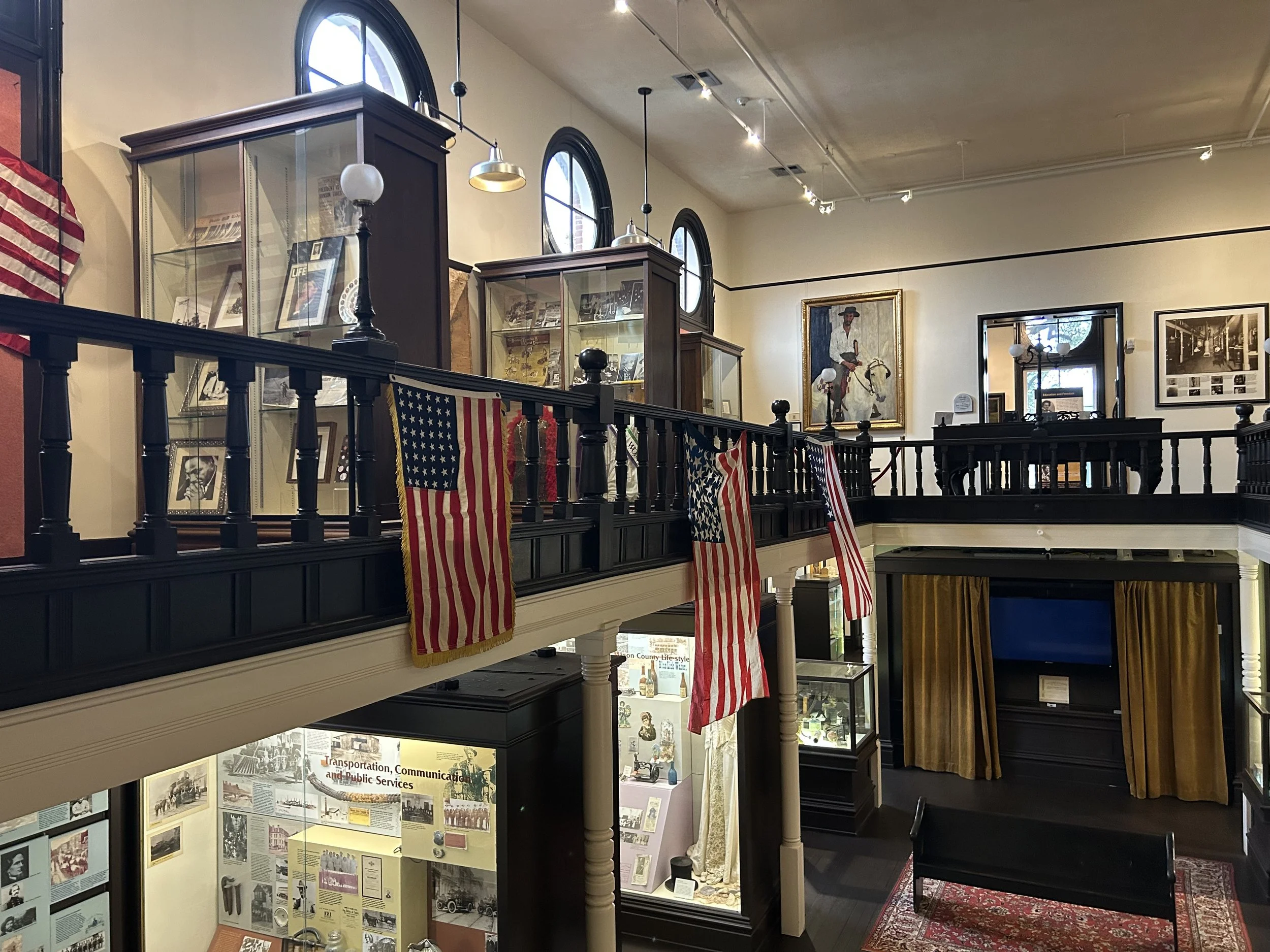
The most iconic symbol of American patriotism is, without a doubt, the American flag. The first American flag was approved by the Continental Congress on June 14th, 1777. Over the course of the last few centuries, Old Glory had many revisions to represent the ever-changing American landscape. It has been a musical muse, visual representation of freedom, and used to communicate pride and loss along the way.
In our new America 250 at KYGMC you can see a wide variety of the flags and it’s many looks! From the very beginning, starting with the Union Jack, you’ll see the story of our nation unfold into the stars and stripes we know today.
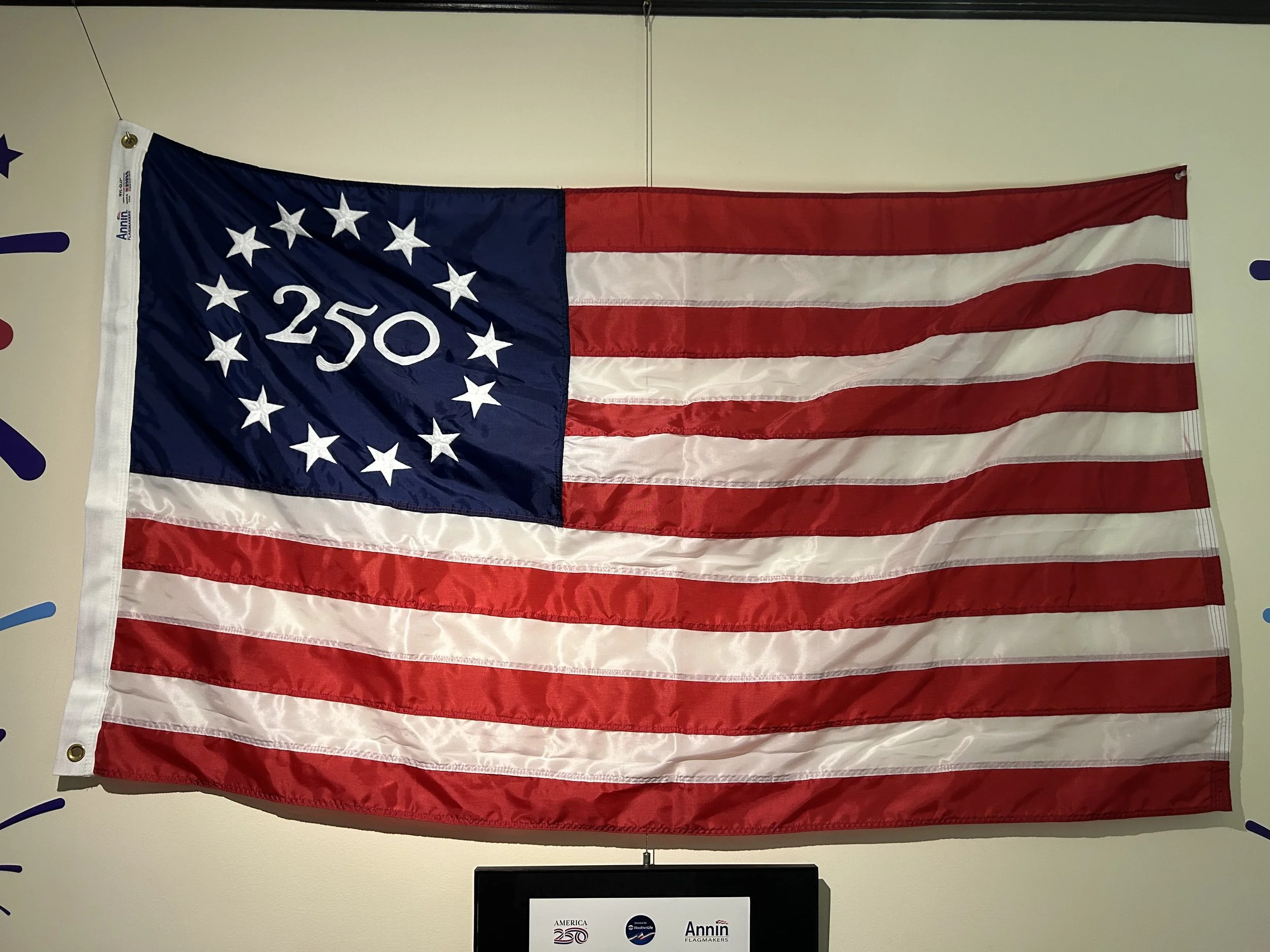
Along with the official American Flag, you’ll also see the Kentucky State Flag and special event flags. Commemorative flags are just one of the ways our nation remembers history and celebrates milestones. In our display you’ll see the 9/11 remembrance flag, Kentucky 225 flag, and our newest addition, the America 250 Flag. The American 250 flag is special to us because the Woodmen of the world, as part of their mission, donates flags to various organizations. This year they decided to donate one of their “250” flags to KYGMC to add to collections!
Below you’ll find more information about the flags we have on display!
Union Jack: The Union Jack or Union Flag is the national flag of the United Kingdom. Before the Revolution, the British Union Jack, the flag of Great Britain, was the banner under which the original thirteen colonies were established and developed. It represented the colonists' British heritage, their legal and cultural ties to the mother country, and their protection under the British Empire.
Grand Union Flag (or the Continental Colors): Precursor to the Stars and Stripes. America's first unofficial national flag, first unfurled by George Washington's army on New Year’s Day in 1776 at Prospect Hill in Somerville, Massachusetts. It served as a physical compromise between war and peace, featuring two distinct components: The British Union Jack in the canton (top left): Represented the colonists' continued loyalty to the British Crown, highlighting their hope that King George III would grant them fair representation in Parliament. Thirteen alternating red and white stripes: Represented the physical unity and solidarity of the thirteen distinct colonies banding together to fight for their rights.
American Bicentennial: The term American Bicentennial Flag primarily refers to the official flag issued for the United States Bicentennial in 1976, though a few distinct historic designs are widely associated with the 200th-anniversary celebration.
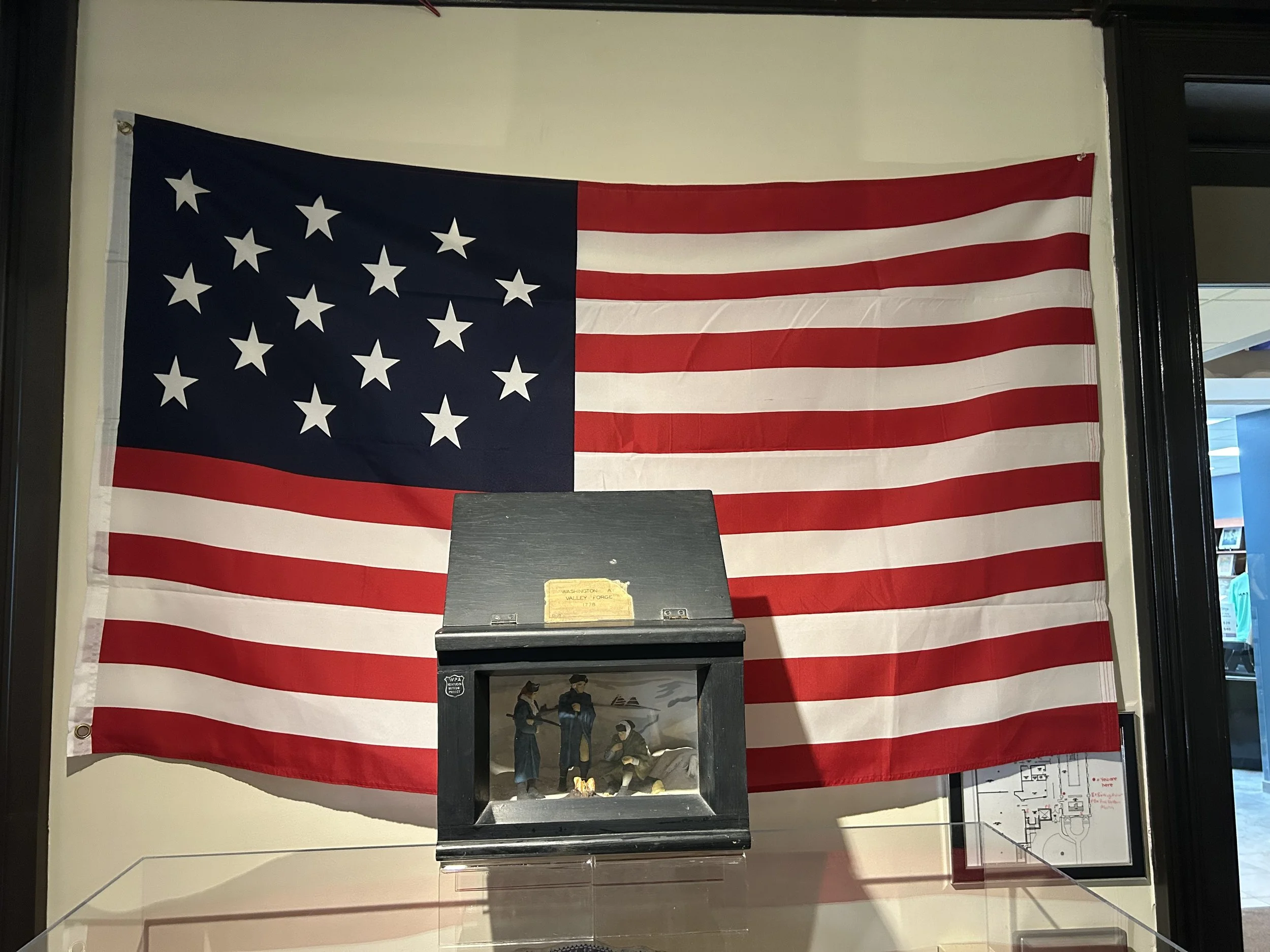
15-star flag: The 15-star and 15-stripe flag was authorized by the Flag Act of January 13, 1794, adding 2 stripes and 2 Stars for Vermont and Kentucky. The regulation went into effect on May 1, 1795. This flag flew from 4 July, 1795 to 4 July, 1818 even though five more states would join the Union during that time.
Kentucky State flag: When Kentucky was admitted to the Union in 1792, the flag signifying its new statehood status, the flag of fifteen stars and fifteen stripes, was adopted. As states were added to the Union and the U.S. flag modified within the next few decades, Kentucky retained the national flag as its unofficial flag. From the end of the Civil War until World War I, Kentucky retained the flag of the Union as its unofficial state flag. An official state flag depicting the state's seal encircled with goldenrod was adopted by the General Assembly in 1918. The two men are officially meant to represent a frontiersman and a statesman. While popular legend often identifies them as Daniel Boone and Henry Clay, they are symbolic figures meant to represent all the pioneers and politicians who helped build the Commonwealth.

Kentucky 225th Anniversary Flag: Commemorates the 225th anniversary of Kentucky becoming a state.
1876 flag: Defined by the nation's Centennial, reflecting an explosion of creative, unofficial designs in honor of America's 100th birthday.
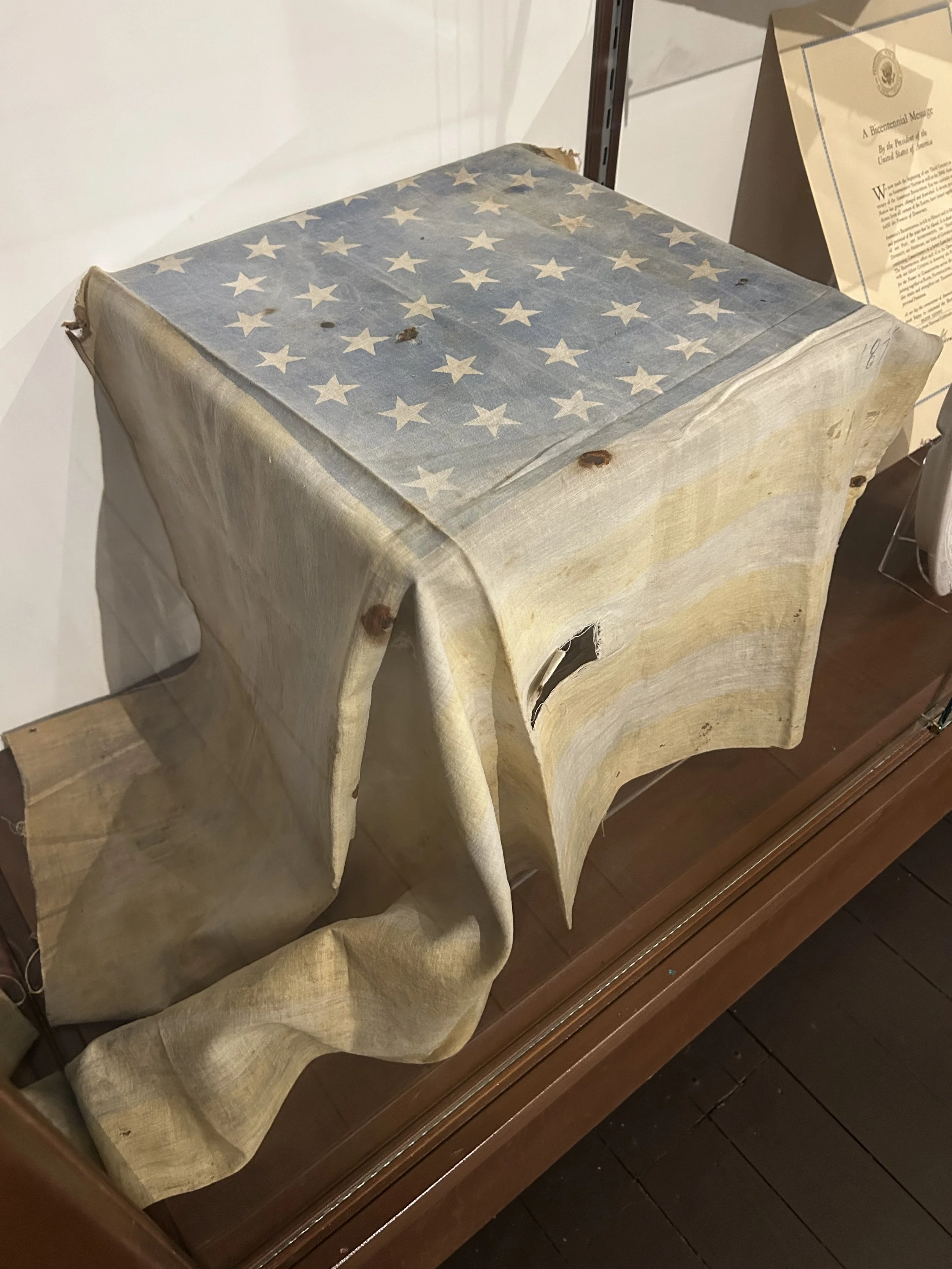
38 Star American: The 38-Star Flag became the Official United States Flag on July 4th, 1877. A star was added for the admission of Colorado (August 1st 1876) and was to last for 13 years.
47 Star Flag: The shortest lived flag! The 47 star flag is rare because it represents the addition of New Mexico in January of 1912. Arizona gained its statehood in February of 1912. The flag on display is handmade.
48 Flag with Gold Fringe: A 48-star U.S. flag with gold fringe is a historical ceremonial flag. The 48-star flag (adding Arizona) was used between 1912 and 1959 and is the longest-serving flag version prior to the current 50-star design. First officially adopted by the U.S. Army in 1835, gold fringe on a flag signifies dignity, honor, and importance. Fringed flags are strictly intended for indoor display or parades.
50 Star Flag: The 50th star was added for Hawaii, which was admitted as a state in 1959.
9/11 flag: Remembers the historic event of September 11, 2001.
250 Flag: Celebrating America 250